SEO Strategy
What an AI SEO Platform Actually Does (And Why It's Not Just Another SEO Tool)
Learn what an AI SEO platform actually automates in 2026, how it differs from Semrush and Ahrefs, and how to choose the best option for your business or agency.

See your site's AI visibility grade
A free instant scan: the same checks this article talks about, run on your own site.
Quick Answer
An AI SEO platform automates the operational work of SEO, including technical audits, content gap analysis, and continuous monitoring, so your team focuses on strategy instead of manual tasks. Unlike traditional tools like Semrush or Ahrefs that surface issues for humans to fix, AI-first platforms detect and often resolve problems automatically. This makes them especially valuable for small businesses and agencies that need results without large SEO teams.
In 2026, the SEO tooling market is crowded and buyers are skeptical. Every platform claims to use AI. But there is a real and measurable difference between tools that report SEO data and platforms that actually act on it. If you are evaluating an ai seo platform for small business, an automated seo audit tool 2026, or comparing the best ai seo platform for agencies, this breakdown gives you a practical framework to cut through the noise.
What an AI SEO Platform Actually Automates
The word “automated” gets misused constantly in vendor marketing. Here is what genuine automation looks like in a purpose-built seo automation platform usa in 2026:
- Continuous technical audits: The platform crawls your site on a set schedule, identifies issues such as broken links, crawl errors, missing meta tags, and Core Web Vitals problems, and in advanced systems deploys fixes without a developer ticket. See how page speed factors into this process in our guide on Core Web Vitals in 2026: How Page Speed Directly Affects Your Google Rankings and Revenue.
- Content gap analysis: NLP and semantic models compare your content against the top-ranking pages for a given query. The platform flags what topics, entities, and questions your pages are missing in real time.
- Keyword research: AI tools reduce keyword research time by 80% and improve content optimization efficiency by 30%, according to Position Digital’s 2026 AI SEO statistics.
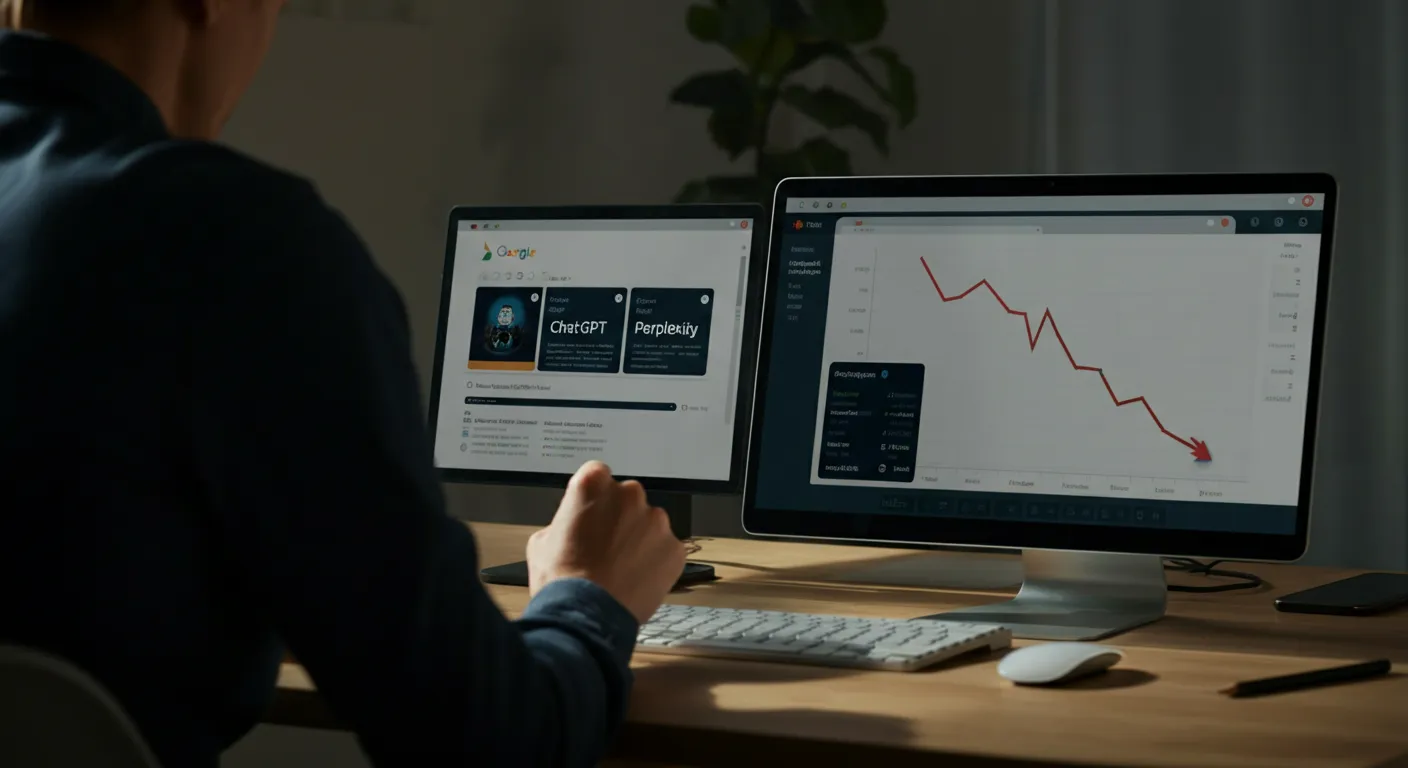
- AI visibility tracking: Monitoring whether your brand and content appear in Google AI Overviews, ChatGPT, and Perplexity. This is a 2026-specific capability that legacy tools were not built to handle.
The key distinction: traditional platforms present the data. AI-first platforms act on it.
AI SEO Software vs Traditional Tools: A Direct Comparison
Understanding ai seo software vs traditional tools comes down to where the platform sits in your workflow, not just how many features it lists on a pricing page.
| Feature | Legacy Tools (Semrush, Ahrefs) | AI SEO Platforms (2026) |
|---|---|---|
| Technical audits | Manual review of crawl reports | Continuous, automated with fix suggestions |
| Content optimization | Keyword data and reports | Semantic gap analysis with real-time scoring |
| AI Overview tracking | Limited or unavailable | Core feature |
| Keyword research speed | Hours per campaign | Minutes (up to 80% faster) |
| Pricing | $100-$500/month and up | Often 30-50% lower at entry level |
| Human effort required | High (interpretation and execution) | Low (strategy and final decisions only) |
| Auto-remediation | No | Yes (in leading platforms) |
SEOmator’s 2026 research shows organic CTR for AI Overview queries dropped 61% (from 1.76% to 0.61%), with individual sites averaging a 34.5% CTR reduction. Platforms built before AI-generated search results were not designed for this environment. Legacy tools bolt on AI reporting features; purpose-built platforms integrate AI into the full workflow loop from detection to fix to monitoring.
Where Human Judgment Still Matters
No ai seo platform for small business or agency replaces human strategy. The automation handles the operational layer. Humans remain responsible for:
- Editorial direction: What topics to pursue and why, based on business goals and audience insight
- Brand voice: How content is written, structured, and positioned against competitors
- Link acquisition: Relationship-based outreach cannot be fully automated with consistent results
- Competitive positioning: Deciding which searches to target requires business judgment, not just data
Think of an AI SEO platform as removing manual overhead so your team can focus on decisions that require context. The goal is not to remove humans from SEO. It is to stop humans from spending time on tasks a machine can handle faster and more consistently.
How to Evaluate the Best AI SEO Platform for Agencies and SMEs
When evaluating an automated seo audit tool 2026 or the best ai seo platform for agencies, use this practical checklist:
- Does it detect and fix, or just detect? Platforms that only surface issues still require manual execution. True AI-first tools close the loop automatically.
- Does it track AI search visibility? If the platform does not monitor Google AI Overviews, ChatGPT, or Perplexity, it is already behind in 2026.
- What is the automation depth? Ask specifically which actions are automated versus which require human initiation.
- Is reporting action-oriented? Dashboards should tell you what to do next, not just what happened last week.
- How does it handle multi-site or multi-client work? For agencies, scalability across client accounts is a firm requirement.
- Is it GDPR and CCPA compliant? Any platform processing site visitor or search data should provide a clear data processing agreement and comply with applicable privacy regulations.
For businesses planning a site rebuild or domain migration, continuity of SEO data is critical. See our Website Migration SEO Checklist for how automated audits reduce risk during a relaunch.
According to Semrush’s 2026 AI SEO Statistics, 86% of SEO professionals have already integrated AI tools into their workflows. The question is no longer whether to adopt an seo automation platform usa. It is which platform gives you the right automation depth for your specific situation.
Frequently Asked Questions
What does an AI SEO platform actually do differently from Semrush or Ahrefs?
AI-first platforms automate the execution layer, not just the reporting layer. Where Semrush and Ahrefs surface problems for humans to fix, purpose-built AI platforms detect issues and can deploy fixes automatically.
Is an AI SEO platform for small business actually affordable in 2026?
Yes. Most AI SEO platforms in 2026 are priced 30-50% lower than legacy enterprise tools, with entry-level plans designed for businesses managing one to five sites.
What is an automated SEO audit tool in 2026?
An automated SEO audit tool continuously crawls your website, identifies technical and content issues, and in advanced cases applies fixes without manual intervention. It replaces the periodic, labor-intensive manual audit process.
How does an AI SEO platform handle content optimization?
It uses NLP and semantic analysis to compare your pages against top-ranking competitors, then flags the specific topics, questions, and entities your content is missing. This process is faster and more consistent than manual content gap analysis.
Can an AI SEO platform track rankings in Google AI Overviews?
The best AI SEO platforms in 2026 include AI Overview tracking as a core feature. Legacy tools were not built for this and often lack meaningful data on AI-generated search results.
What is GEO and why does it matter for SEO in 2026?
GEO stands for Generative Engine Optimization, the practice of optimizing content to appear in AI-generated search results like Google AI Overviews and Perplexity. The GEO market is projected to grow from $886 million in 2024 to $7.3 billion by 2031.
Is the best AI SEO platform for agencies different from what small businesses need?
Agencies need multi-client management, white-label reporting, and scalable automation across dozens of sites. SMEs typically prioritize ease of use and automated audits, and most leading platforms offer tiered plans that serve both use cases.
Does AI-referred traffic convert better than standard organic traffic?
Yes. Research shows AI-referred visitors convert at 23 times the rate of standard organic visitors, with B2B SaaS companies reporting 6-27 times higher conversion rates from AI-sourced traffic.
Do I still need an SEO team if I use an AI SEO platform?
Yes, but a smaller and more strategic one. AI handles audits, monitoring, gap analysis, and routine fixes, while humans focus on strategy, brand direction, and decisions that require business context.
What should I prioritize when comparing an SEO automation platform in the USA?
Prioritize platforms that offer continuous audits, AI search visibility tracking, auto-remediation, GDPR and CCPA compliance, and transparent pricing. Check whether the platform was purpose-built for AI-first search or retrofitted with AI features after the fact.
About the author

AI Content Team
Marketing Team
The vaza.ai team helps small businesses modernize their websites and eliminate the cost, maintenance, and security headaches of legacy platforms.
Related reading


Want this running on your own site?
Run the free scan and see what Google and the AI answer engines actually find. Then watch the platform monitor, fix and publish on autopilot.
Free instant grade · No signup · See what Google & AI see on your site