Industry SEO
SEO for Beauty Studios: From Instagram Famous to Fully Booked
SEO for lash, brow, and beauty studios: turn Instagram fame into Google bookings with service pages, artist pages, GBP categories, and review velocity.
See your site's AI visibility grade
Free instant scan — the same checks this article talks about, run on your own site.
The Studio Plateau
SEO for beauty studios turns social-built reputations into search-captured bookings by giving lash, brow, permanent makeup, and waxing services their own optimized pages, artist profiles, and a Google Business Profile tuned with precise categories like “Eyelash salon.” Studios that rely solely on Instagram plateau once they exhaust their follower graph — search reaches the strangers who are ready to book today: the woman who just relocated, the bride whose usual artist is booked, the first-timer whose friend’s brows finally convinced her.
Those strangers all do the same thing — they type “lash extensions near me” or “microblading touch up” into Google. A studio invisible in those results is invisible to precisely the demand it has not already won. This guide covers how to capture that demand without abandoning what built the studio. Social remains the portfolio; search becomes the pipeline.
Technique Names Are the Keyword Map
Beauty studio clients are unusually fluent in technique vocabulary — the treatments are marketed by name across social platforms, so the searches arrive pre-specified. That fluency is a gift to SEO, because each technique is a page you can own:
| Keyword pattern | What the searcher wants | Page to build |
|---|---|---|
| lash extensions near me | New set, comparing studios | Lash extensions page |
| volume lashes [city] | Knows styles, wants a specialist | Lash styles section (classic/hybrid/volume) |
| lash lift and tint near me | Low-maintenance alternative seeker | Lash lift page |
| lash fill near me | Has lashes, needs upkeep — may be switching studios | Fills page with policy |
| brow lamination [city] | Trend-aware brow client | Brow lamination page |
| microblading near me | Considering permanent makeup | Microblading page |
| powder brows vs microblading | Undecided, high intent | Comparison page |
| lip blush [city] | PMU-literate | Lip blush page |
| brazilian wax near me | Recurring service, proximity-led | Waxing page |
| makeup artist near me | Event-driven, date attached | Makeup services page |
| bridal makeup trial [city] | Books far ahead, brings a party | Bridal page |
| spray tan near me | Occasion prep, often same-week | Spray tan page |
Note the quiet gold in “lash fill near me”: that searcher already wears extensions, visits every two to three weeks, and is searching because something changed with her current studio. She is the highest-lifetime-value stranger in the vertical, and a fills page with clear pricing and a same-week booking path is built for her.
The Comparison Layer Most Studios Skip
Because the vertical offers competing solutions to the same goal — extensions vs lift, microblading vs powder brows vs henna, waxing vs sugaring — a large share of searchers are stuck between options. Studios almost never publish for this moment; they assume the consult handles it.
Publish it instead. Honest comparison pages (“Lash lift or extensions? How to choose”) rank for the vs-searches, pre-answer the consultation’s opening questions, and position the studio as the adviser rather than the seller. The client who chooses her technique on your page books the appointment on your page. This is the single cheapest conversion asset in the niche.
Artist Pages: Your Roster Is a Ranking Asset
In a multi-artist studio, each artist arrives with a following and a searchable name or handle. Build a page per artist — specialties, certifications (lash and PMU clients do check), portfolio, booking link to their column. When her sets circulate with her handle attached, the searches resolve to your domain and your booking system, not to a DM inbox she answers between clients.
This matters doubly for permanent makeup, where artist skill is the entire risk calculation. A PMU artist page with training credentials and a healed-results gallery does trust-building work no studio-level page can.
Getting the Profile Right When You Do Five Things
The classic studio problem: you offer lashes, brows, PMU, waxing, and makeup — and Google asks for one primary category. Choose by revenue center, not breadth. A lash-led studio takes “Eyelash salon” as primary, then stacks true secondaries: “Waxing hair removal service,” “Permanent make-up clinic,” “Make-up artist,” “Beauty salon.” The precise primary wins the searches you most need; the broad label wins nothing in particular.
Beyond categories: connect your booking platform (Vagaro, GlossGenius, Booksy, Square and peers integrate) so profile visitors book without DMing; load the services list with technique names and prices; and treat the photo gallery as your searchable portfolio — recent sets, healed brow results, the studio space. Post consistently enough that the profile looks as alive as your feed. If the profile is the marketing chore that never gets done between clients, GBP management exists to make it someone else’s discipline.
And because studio questions are endlessly repetitive — fill policies, patch tests, healed-versus-fresh expectations, deposit rules — an AI chatbot on your site answers the 9 p.m. questions that otherwise become unanswered DMs and lost bookings.
Appointment-Only, Said Out Loud
Beauty studios are the most appointment-bound corner of the beauty world — services run one to three hours, chairs are booked in advance, and walk-ins genuinely cannot be served. That is fine. What is not fine is a searcher discovering it at your door.
State “appointment only” in the profile description, on the homepage, and in your hours notes. Pair the statement everywhere with a one-tap booking path, including deposit and cancellation terms published before checkout, not revealed after. In this vertical, policy transparency is not fine print; it is the difference between a booked stranger and a one-star story about a forfeited deposit.
Aftercare Pages Earn Twice
Every service in this vertical ships with aftercare: no water on fresh lash sets for the first day, healing timelines for microbladed brows, exfoliation rules before a spray tan, what a lash lift can and cannot tolerate. Most studios deliver this on a card or an Instagram story highlight — formats that neither clients nor search engines can find two weeks later.
Publish each aftercare protocol as a page. The first payoff is search: “microblading healing stages day by day” and “can I shower after a lash lift” are questions your future clients ask before booking and your current clients ask after — a studio whose pages answer them is present at both moments, including in the AI-assistant answers that increasingly handle this kind of question. The second payoff is operational: linked from every booking confirmation, aftercare pages cut the repetitive DM load and, more importantly, cut the preventable bad outcomes that become preventable bad reviews. A client who ruined her own set by ignoring instructions she never received is, as far as your rating is concerned, your fault.
Show the Healed Result, Not Just the Fresh One
Studio portfolios everywhere share a bias: everything is photographed at minute zero, fresh, sharp, and swollen-adjacent in the case of PMU. But experienced clients — the high-value ones — have learned to ask a different question: what does it look like healed, at week four, at the fill mark?
Answering with healed and worn-in photos separates a studio instantly. A brow gallery that pairs fresh work with six-week healed results, a lash page showing a set at day one and day fourteen, honest lighting throughout — this is proof the trend-chasing competitors cannot fake, and it converts precisely the skeptical researcher who has been burned before. Caption the timelines plainly, organize galleries by technique, and let the durability of your work do the ranking-page dwell-time work thin galleries never will.
Reviews: Proof the Studio Is Good Right Now
Lash and brow work degrades and regrows — which means clients judge studios on current form, and so does everyone reading reviews. A studio whose latest review is seven months old raises the exact doubt (“did the good artist leave?”) that steady weekly reviews erase.
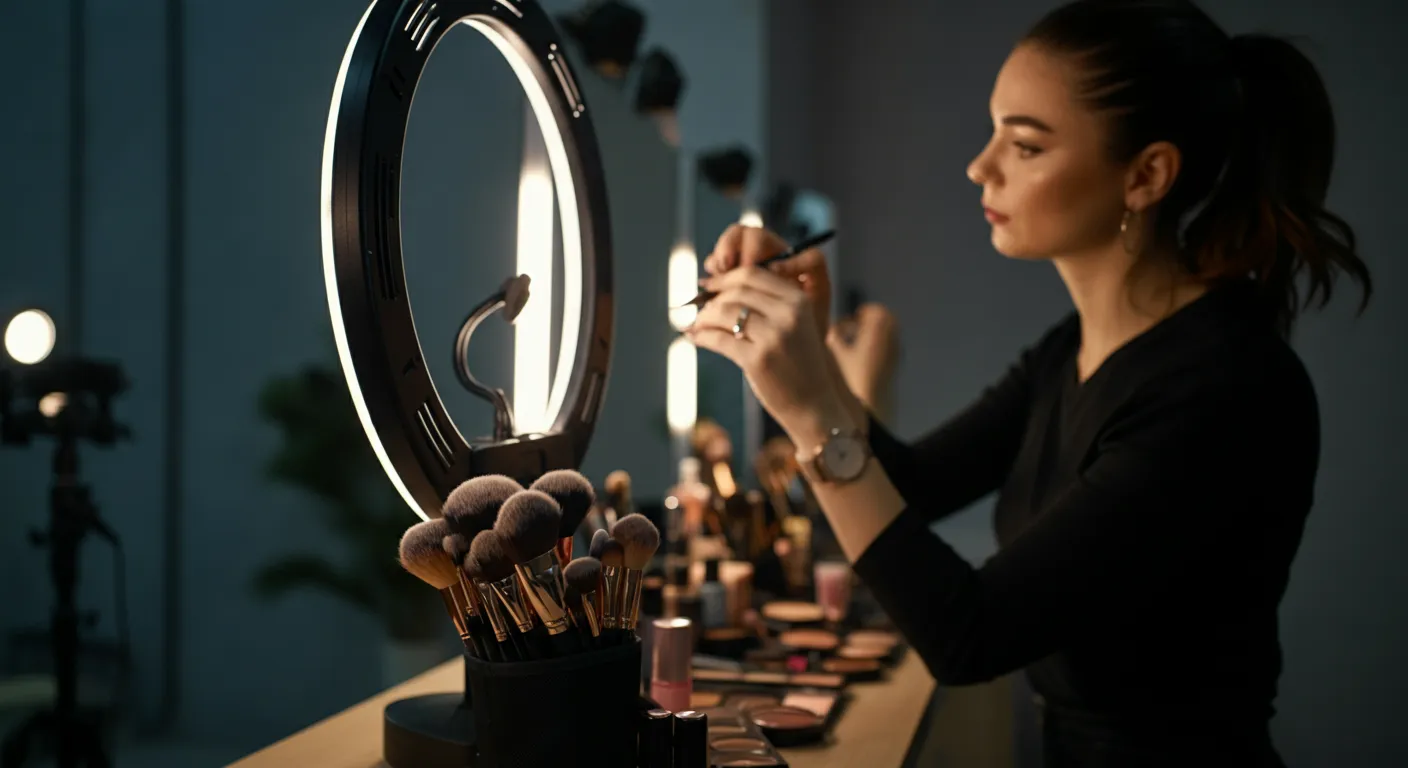
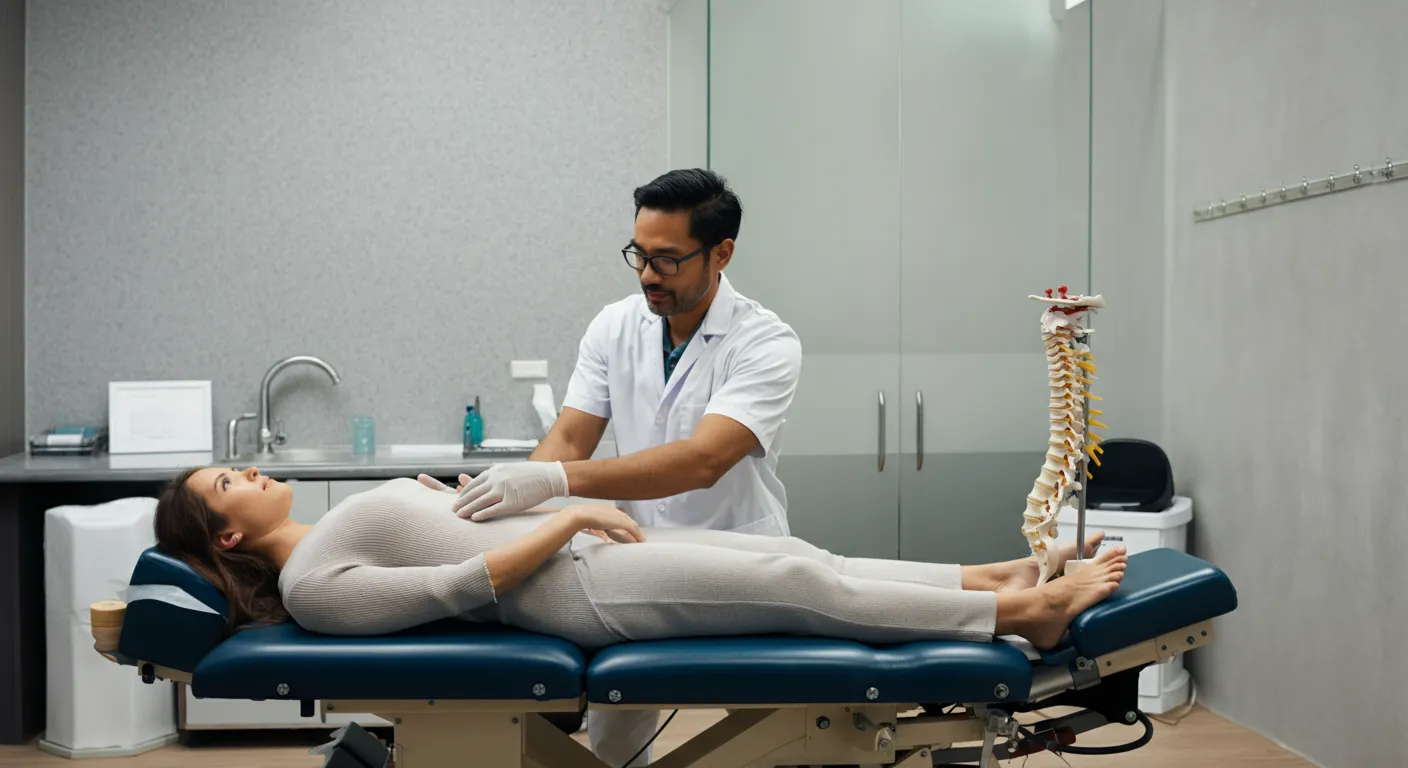
Build the ask into the retention cycle you already run: the client admiring her fresh set in the ring light is the ask; the confirmation text after her fill is the reminder. Encourage the specific — technique, artist, longevity (“still full at week three”) — because those phrases do search work generic praise cannot. Answer every review, and answer the rough ones the way you would in the studio: warmly, factually, once. The same maintenance-cycle logic drives review strategy in other recurring-visit practices — our chiropractor SEO guide shows the pattern in a clinical setting.
The Vertical’s Signature Mistake: The Linktree Website
An enormous number of beauty studios have, as their entire web presence, a link-in-bio page: a Linktree with a booking link, a price PDF, and a DM button. It works for followers. It is a dead end for search — those pages rank for nothing, belong to another company’s domain, and say nothing Google can match to “brow lamination near me.”
The fix does not require a big site: a fast homepage, a page per technique, the comparison layer, artist pages, and published policies. Ten pages that answer real searches will outrank any bio link and outlast any algorithm mood. The full process we run for studios starts exactly there.
If You Rent a Suite, You Are Still a Business on the Map
A growing share of lash and PMU artists operate solo inside salon-suite buildings, and many assume a suite is too small for a real search presence. The opposite is true: Google treats a suite-based artist as a full business, eligible for her own profile at the building’s address with her suite number, her own reviews, and her own technique pages. The traps are specific to the format — set the profile’s name to your actual studio name (not the suite building’s brand), keep your service-area and hours accurate since nobody answers a door buzzer mid-appointment, and make online booking the only path in. Done right, a one-chair suite can outrank a six-chair studio, because profile strength and review velocity — not square footage — are what the rankings weigh.
Numbers That Mean the Plateau Broke
- Bookings by source in your scheduling platform: watch the Google-attributed share grow against the Instagram share.
- New-client count and their services — is search delivering the high-value fills-and-PMU mix or one-off spray tans?
- Retention of search-acquired clients at 60 and 90 days, the true test of pipeline quality.
- Profile actions — booking clicks, calls, direction requests — month over month.
- Rankings for your technique-plus-city terms, checked monthly.
Give pages a quarter to establish. The studios that do this rarely post less on Instagram — they just stop depending on it alone.
If your studio also runs hair services, the search dynamics shift toward color and stylist economics — covered in our companion hair salon SEO guide.
Key takeaways
- Studios built on Instagram plateau at their follower graph; search adds the strangers who are ready to book today.
- Lash, brow, and PMU clients search techniques by name — gel-free terms like "lash lift," "brow lamination," "powder brows" each deserve a page.
- Comparison content (microblading vs powder brows, lash lift vs extensions) converts the undecided better than any portfolio.
- Publish full-set and fill pricing with your fill policy — ambiguity there costs bookings and generates bad reviews.
- Choose a precise primary GBP category such as "Eyelash salon" rather than a broad beauty label.
- Appointment-only works in search as long as every surface says so and booking is one tap away.
- Track bookings by source and retention of search-acquired clients, not follower counts.
Frequently Asked Questions
My lash studio is booked from Instagram alone. What would SEO add?
Search reaches ready-to-book strangers your Instagram cannot, and protects you from algorithm swings.
Resilience and reach. Instagram bookings depend on an algorithm you do not control and mostly reach people who already follow you. Search reaches the person who just moved to town, whose lash artist retired, or who saw a set on a friend and typed "lash extensions near me" — none of whom follow anyone yet. Studios that add search to a strong social base typically find it brings clients with less back-and-forth, because searchers arrive ready to book rather than ready to chat.
Should microblading and powder brows be on one page or separate pages?
Separate pages per technique, plus comparison content for the undecided — that is where conversions hide.
Separate pages, because clients search them as distinct choices and often want help choosing. Give each technique its own page — what it is, healed results, longevity, price, touch-up policy — and add a comparison section or page for the "microblading vs powder brows" searches where undecided clients live. That comparison content is some of the highest-converting material a brow studio can publish, because it does the consultation's first ten minutes in advance.
What should a beauty studio charge page include for a fill versus a full set?
Full set price, fill price, the time cutoff between them, and your fill policy, stated plainly.
Both prices, the time window that separates them, and your policy for what counts as a fill — for example how many weeks out or what percentage of lashes remaining. Fill policies are among the most-searched and most-disputed topics in the lash world, and publishing yours clearly filters mismatched expectations before they reach the chair or your reviews.
Which Google category fits a studio that does lashes, brows, and waxing?
Primary category for your main revenue line (often "Eyelash salon"), secondaries for the rest.
Pick the primary category that matches your main revenue line — "Eyelash salon" for a lash-led studio — then add secondaries like "Waxing hair removal service," "Permanent make-up clinic," or "Beauty salon" to cover the rest. The primary carries the most ranking weight, so choose by business reality rather than by which label sounds broadest.
How do appointment-only studios handle Google visitors who expect walk-ins?
State it everywhere and pair it with one-tap booking, so the walk-in impulse becomes an appointment.
Say "appointment only" in your profile description, business hours notes, and website header, and make booking one tap from every surface. Appointment-only is normal in this vertical and clients accept it readily — what they do not accept is discovering it after driving over. Clarity plus an instant booking path converts the walk-in impulse into a booked slot instead of a lost client.
About the author
vaza.ai Team
Digital Marketing Specialists
The vaza.ai team helps growing businesses win online with AI-powered SEO and managed website infrastructure.
Related reading
Want this running on your own site?
Run the free scan and see what Google and the AI answer engines actually find — then watch the platform monitor, fix and publish on autopilot.
Free instant grade · No signup · See what Google & AI see on your site