
Industry SEO
SEO for Carpet Cleaners: Stand Out in a Coupon-Driven Market
Local SEO for carpet cleaning companies: escaping the coupon trap, stain and service pages, before-and-after proof, GBP setup, and repeat bookings.
See your site's AI visibility grade
Free instant scan — the same checks this article talks about, run on your own site.
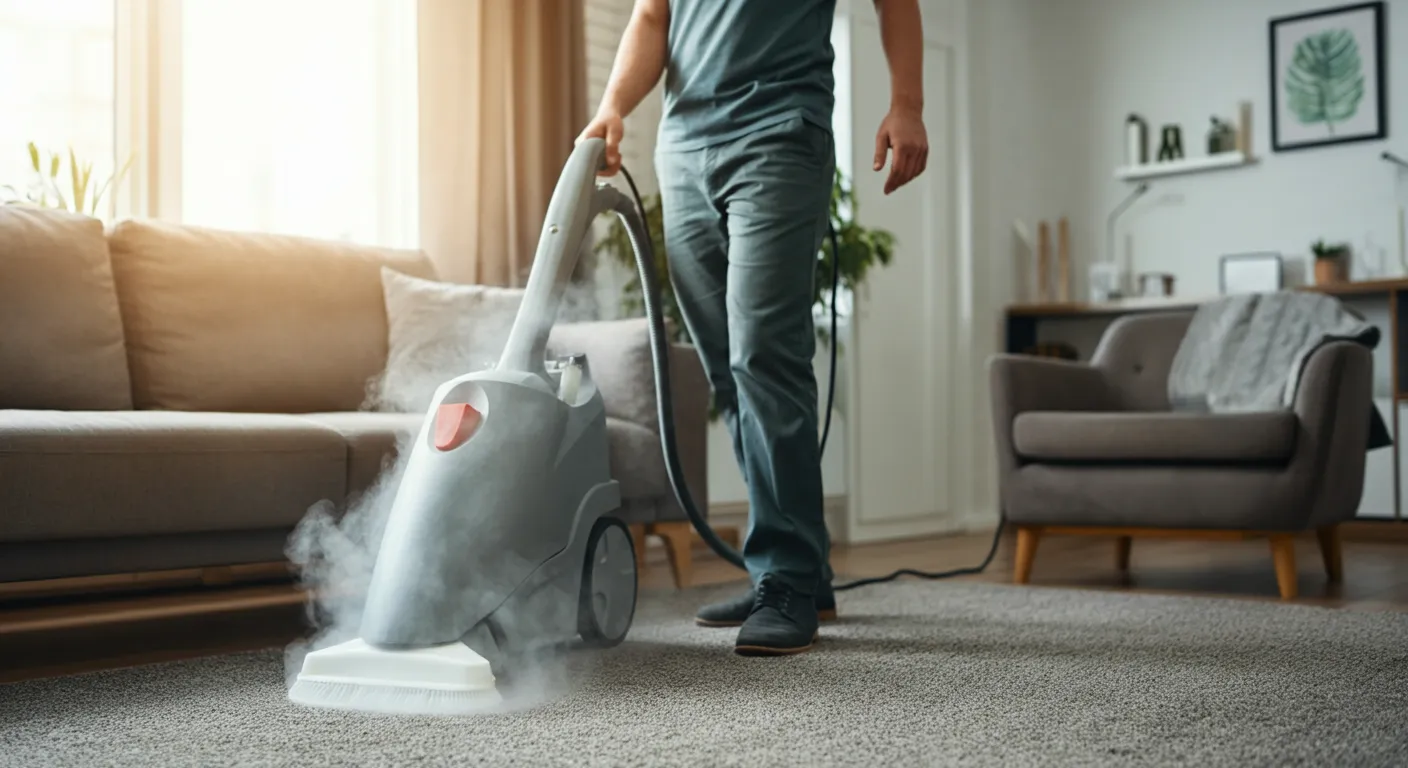
Carpet cleaning might be the most price-attacked niche in home services. Every market has coupon operators advertising three rooms for a price that barely covers fuel, and their bait-and-switch reputation drags on everyone. The way out is not a cheaper coupon — it is ranking for the searches where the buyer’s question is “will this actually work?” rather than “who is cheapest?”
Two Kinds of Carpet Cleaning Customers, Two Kinds of Searches
Watch how carpet cleaning demand actually arrives. One stream is scheduled maintenance: homeowners booking a deep clean before hosting, after winter, or at a lease change. These buyers plan days or weeks ahead, compare a couple of companies, and are moderately price-aware. The other stream is problem-driven: a dog had an accident, red wine hit the beige carpet, a mystery smell will not leave the family room. These buyers search the problem — often within hours — and price is secondary to confidence that the problem will be gone.
The problem stream is where good operators build their margins, because coupon competitors have nothing to say about pet urine chemistry or wool rug care. Your SEO strategy should serve both streams but be built around the second.
The Coupon Trap: The Industry’s Signature SEO Mistake
The most common mistake carpet cleaners make online is building the entire web presence around price: a homepage headlined by a discount, thin pages targeting “cheap carpet cleaning [city],” and ads shouting room-count deals. This attracts exactly the leads the operator then complains about — price shoppers who churn, haggle, and never rebook — while surrendering the pet-odor and stain searches to whoever bothered to write about them.
Price content also caps your rankings: pages with a coupon and fifty words give Google nothing to rank for the substantive searches. Flip the site’s center of gravity from “how cheap” to “how we get results,” and both the rankings and the lead quality follow.
Keyword Patterns for Carpet Cleaning Companies
| Keyword pattern | Which buyer it is |
|---|---|
| carpet cleaning [city] | Scheduled maintenance, comparing options |
| carpet cleaners near me | Ready to book, map-pack driven |
| pet stain and odor removal | Problem-driven, high motivation |
| pet urine smell out of carpet | Urgent problem, often same-week booking |
| upholstery cleaning service | Adjacent service, add-on potential |
| area rug cleaning [city] | Specialty work, higher ticket |
| red wine stain removal carpet | Acute problem search |
| steam cleaning vs dry cleaning carpet | Research stage, method-curious buyer |
| tile and grout cleaning | Service expansion search |
| commercial carpet cleaning [city] | Contract buyer, recurring revenue |
| move out carpet cleaning | Deadline-driven, renter or landlord |
| how often should carpets be cleaned | Early research; positions your reminder pitch |
Service Pages: One Page Per Surface, One Page Per Problem
Structure the site so each search above has a page that genuinely answers it:
- /services/carpet-cleaning — your method (hot water extraction, low-moisture, whatever you run), dry times, what is included
- /services/pet-stain-odor-removal — the flagship problem page: why urine reoccurs, subfloor treatment, enzyme process
- /services/upholstery-cleaning — fabric types, testing process
- /services/area-rug-cleaning — wool and oriental rug care, pickup and drop-off if offered
- /services/tile-grout-cleaning — the natural add-on for hard-floor homes
- /services/commercial-carpet-cleaning — offices and restaurants; recurring contract framing
- /services/move-out-cleaning — deadline framing, landlord documentation
Supplement with stain-specific articles — wine, coffee, ink, slime — that each link to the relevant service page. These articles pull in problem searchers at the exact moment of need, and even the DIY-first readers convert later when the home remedy fails.
Before-and-After: Curing the Believability Problem
Carpet cleaning has a trust deficit — too many homeowners have paid for a cleaning that looked fine wet and disappointing dry. Your counter-evidence is the honest before-and-after pair. Make the photo a standard step in every job: same angle, same lighting where possible, shot after the carpet dries when you can get it.
Publish them with specific captions (“ten-year-old pet stains, nylon carpet, two-pass enzyme treatment”) and group galleries by problem type, so the pet-odor page shows pet results and the rug page shows rugs. Unfiltered, slightly imperfect photos outperform glossy stock imagery precisely because they look like proof rather than advertising. Feed the best pairs to your Google Business Profile weekly as well — they work just as hard there.
Method transparency compounds the effect. A short explanation of your process on each service page — what the machine does, what the chemistry does, why dry time varies — separates you from the spray-and-pray operators without naming them. The customer who has been burned before is reading for exactly this: evidence that you understand why the last cleaning failed. Explaining wicking, or why some stains reappear after a bargain cleaning, converts skeptics no discount could reach.
Google Business Profile for Carpet Cleaners
Set Carpet Cleaning Service as the primary category, with secondaries matching your service list — Upholstery Cleaning Service and, where applicable, Commercial Cleaning Service or Water Damage Restoration Service if you carry that equipment and certification. Operate as a service-area business with your address hidden if you dispatch from home.
Priorities specific to this trade:
- List every service and its description in the services section — this is how “upholstery cleaning near me” matches a profile categorized for carpets.
- Post before-and-after photos and seasonal booking prompts (spring refresh, pre-holiday) as Google Posts.
- Keep your booking link current; carpet cleaning buyers convert well through online scheduling because the job is easy to specify.
- Answer Q&A entries about dry time, pets, and products — the questions repeat, and public answers pre-sell every future reader.
Reviews and the Follow-Up Flywheel
Carpet cleaning economics run on the second visit. The marketing math changes completely when a customer returns annually and adds upholstery every other visit — which means review requests and follow-up are not admin chores, they are the growth engine.
Reviews first: request on Google via text within an hour of job completion, while the transformation is fresh underfoot. Reply to every one, naming the service. Keep Thumbtack active if you want small-job volume (speed of response wins there), maintain Yelp in metros where it matters, and let Angi exist as a credibility checkbox. A systematic review management process keeps the request-and-respond loop running when jobs stack up.
Then the flywheel: a reminder when a customer’s re-cleaning window approaches, a seasonal note before spring and the holidays, a check-in after big pet-treatment jobs. Done manually this always decays; automated follow-up makes rebooking a system instead of a memory. Repeat rate is the metric that separates thriving carpet cleaners from busy-but-broke ones.
Online Booking: The Conversion Advantage Most Cleaners Waste
Carpet cleaning is one of the few home services a customer can specify accurately without a site visit — rooms, approximate square footage, stains, pets. That makes it unusually well suited to true online booking, and yet most local cleaners still funnel everyone to a phone number that goes to voicemail during jobs.
The gap is an opportunity. A booking flow that lets a customer pick a service, describe the rooms, and choose a time slot converts the evening researchers — the people comparing companies at nine at night, when no one answers phones. It also quietly filters the coupon crowd, who prefer to haggle by phone, and pre-commits the customer in a way a callback request never does. If instant scheduling is more than your calendar can handle, the halfway version still works: a quote form with room count and photos, answered first thing each morning.
Whatever the mechanism, speed decides outcomes. A problem-driven searcher with a fresh stain books with whoever responds first; being second by three hours is being last.
Beyond Carpets: The Adjacent Searches Hiding in Your Truck
Most carpet cleaning rigs can already handle work that customers search for separately: upholstery, mattresses, area rugs, tile, sometimes vehicle interiors. Each of those searches has its own intent and its own — usually weaker — competitive field, because most local competitors never build pages for anything beyond carpet.
The revenue logic is stacking: a customer who books carpets and sees a clear upholstery offer on the confirmation page adds it far more often than a cold prospect books it alone. The SEO logic is coverage: an upholstery page, a mattress-cleaning page, and a rug page each pull in their own stream of searchers who then discover you also do carpets. Build the pages for the services already on the truck before spending anything chasing more carpet-term rankings — it is the cheaper expansion by a wide margin.
Seasonality: Spring Refresh and the Pre-Holiday Sprint
Carpet cleaning has two reliable peaks. Spring brings the deep-clean impulse — winter grime, open windows, allergy motivation. Late fall brings the pre-holiday sprint, compressed into the weeks before guests arrive, when same-week availability becomes a selling point worth advertising. Summer runs steady with move-out work in rental-heavy markets tracking lease cycles, and January is the quietest stretch — the right time to push commercial contracts and rug cleaning, which are less seasonal.
Content and offers should ride this curve: publish spring-cleaning content in late winter, promote holiday-ready slots from October, and use the January lull for the commercial outreach that smooths the whole year. This peak-and-trough pattern is the mirror image of trades where weather emergencies drive winter demand — HVAC SEO shows how the same tools apply when the seasonality flips.
Measurement: Booked Jobs, Not Clicks
Keep the scorecard short and financial:
- Booked jobs by source — GBP, organic service pages, Thumbtack — tracked monthly.
- Lead mix — what share of inquiries are problem-driven vs coupon-hunting; this tells you whether the strategy is working.
- Rebooking rate — the percentage of customers who return within eighteen months; the follow-up flywheel’s report card.
- Map-pack presence for “carpet cleaning [city]” and “pet stain removal” terms.
- Average ticket by lead source — problem-search leads should show visibly higher tickets; if not, the upsell conversation needs work.
One caution on reading these numbers: carpet cleaning’s peaks distort everything, so judge each month against the same month last year rather than the month before. A November that looks slow next to October may still be your best November ever — and that is the comparison that tells you whether the strategy is compounding.
If you are weighing what outside help costs against those numbers, our pricing is public. And when your customers’ search behavior involves not a stain but an entire household in transit, the playbook changes again — our guide to SEO for moving companies covers the industry where trust is the entire sale.
Key takeaways
- The coupon operators own the price searches — profitable carpet cleaners win the problem searches instead.
- Pet stain and odor removal is the industry's highest-value search theme; it deserves its own page, not a bullet point.
- Real before-and-after pairs, captioned by stain and fiber type, overcome the believability problem that haunts this industry.
- Each service — carpet, upholstery, rug, tile and grout — needs its own page to match how people search.
- Set Carpet Cleaning Service as your GBP primary with secondaries like Upholstery Cleaning Service.
- Demand peaks in spring and before the winter holidays; repeat customers are the business model, so follow-up is marketing.
- Track booked jobs and rebooking rate by source — a returning customer is worth more than any single ranking.
Frequently Asked Questions
How do I stop competing with $99 carpet cleaning coupons?
Target problem searches like pet odor and stain removal instead of price searches, and lead with proof of results.
You stop by refusing to fight on their battlefield. Coupon operators win the price-only searches; you win the quality and problem searches — pet odor removal, stain-specific fixes, upholstery and rug care — where buyers care whether the smell actually goes away. Build content that explains your method and shows real before-and-after results, and your leads shift from coupon shoppers to homeowners who ask "can you fix this?" before "how much?"
What pages should a carpet cleaning website actually have?
One page per service — carpet, upholstery, rug, pet odor, tile — plus stain-specific content for problem searches.
At minimum: carpet cleaning, upholstery cleaning, area rug cleaning, pet stain and odor treatment, and tile and grout if you offer it — each as its own page. Add a commercial page if you serve offices, and stain-specific content for the problems people actually search, like red wine or pet urine. One combined services page forces all of those searches to compete for a single, unfocused result.
Do before-and-after photos matter for carpet cleaning?
Enormously. Real stain-removal pairs, captioned with fiber and stain type, overcome the industry's believability problem.
They are the most convincing thing you can publish. Carpet cleaning suffers from a believability problem — homeowners have been burned by cleaners whose results vanished in a week — and a library of real, unfiltered before-and-after shots of stains you removed is the antidote. Caption each pair with the fiber type and the stain, and organize them by problem so a pet-odor searcher sees pet results.
How do I get carpet cleaning customers to book again next year?
Systematic follow-up: post-job review request, a re-cleaning reminder months later, and seasonal offers before peak periods.
Repeat business is where carpet cleaning economics actually work, and it rarely happens by itself. Capture every customer's contact details at booking, then follow up on a schedule — a thank-you plus review request after the job, a reminder when their typical re-cleaning window approaches, and seasonal offers before spring and the holidays. Automated follow-up turns a one-visit customer into an annual one without you tracking dates by hand.
Is Yelp or Thumbtack better for carpet cleaning leads?
Google first everywhere. Thumbtack is a decent secondary lead source; Yelp depends heavily on your city.
It depends on your metro, but neither replaces Google. Thumbtack can deliver steady small jobs in most markets if you respond fast, while Yelp's influence is strong in some cities and negligible in others. Google reviews and the map pack decide the majority of carpet cleaning calls, so build your review engine there first and treat the others as secondary channels you keep tidy.
About the author
vaza.ai Team
Digital Marketing Specialists
The vaza.ai team helps growing businesses win online with AI-powered SEO and managed website infrastructure.
Related reading


Want this running on your own site?
Run the free scan and see what Google and the AI answer engines actually find — then watch the platform monitor, fix and publish on autopilot.
Free instant grade · No signup · See what Google & AI see on your site